

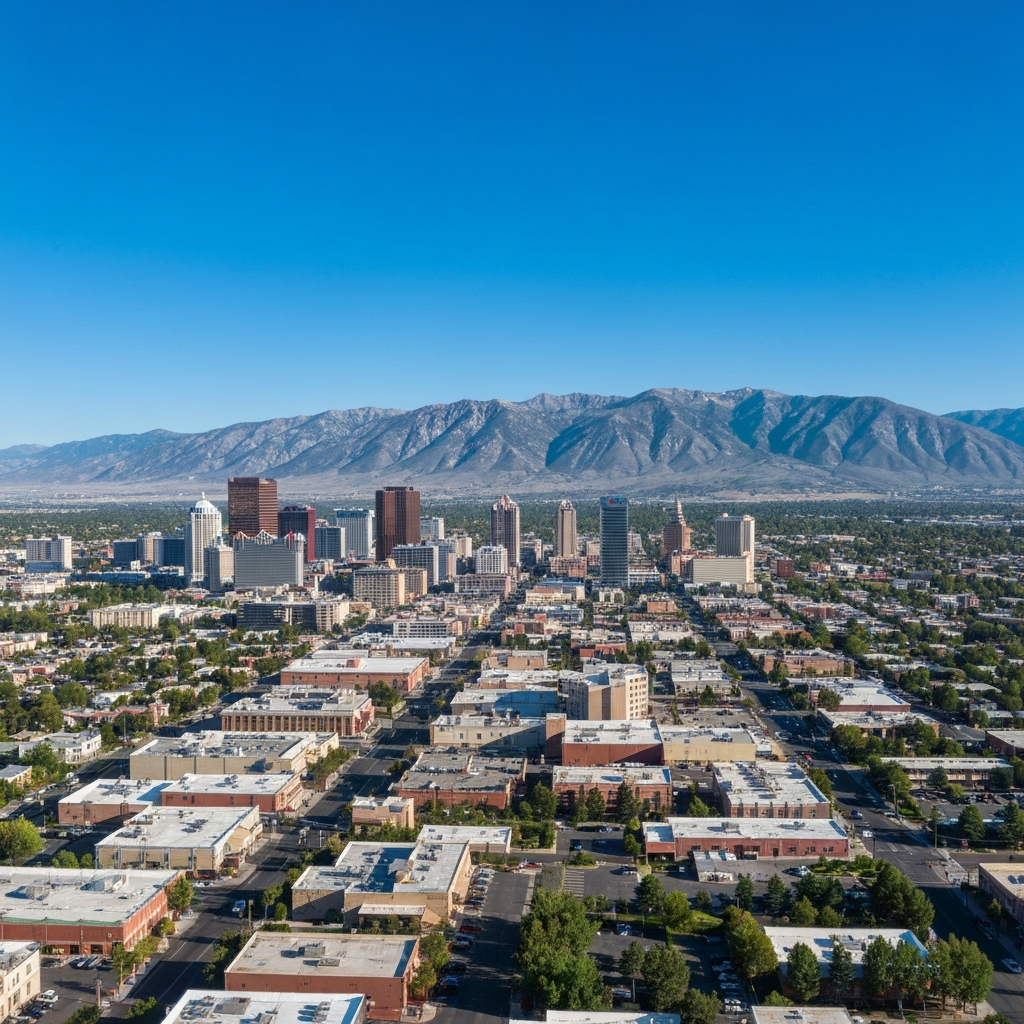
Reno, Nevada, offers a distinctive climate characterized by its position in the high desert of the Great Basin and the influence of the Sierra Nevada mountain range. This unique setting results in significant temperature variations and specific environmental conditions that residents and visitors should be aware of.
Seasonal Weather Patterns
Spring
Spring in Reno, from March to May, is marked by warming temperatures and the melting of winter snow. Average high temperatures transition from 46.9°F (8.3°C) in March to 63.7°F (17.6°C) in May. Humidity decreases throughout the season, and rainfall is moderate, with March experiencing the highest precipitation at 1.42 inches (36mm).
Summer
Summers, spanning June to August, are hot and arid, with average high temperatures ranging from 75.4°F (24.1°C) to 85.5°F (29.7°C). Low humidity levels make the heat more bearable. Notably, Reno has experienced a significant increase in summer nighttime temperatures, with an average rise of 17.7°F between 1970 and 2024.
Autumn
Autumn, from September to November, brings cooler temperatures, with average highs dropping from 75.2°F (24°C) in September to 61.2°F (16.2°C) in November. Humidity levels rise as the season progresses, indicating increased moisture in the air.
Winter
Winters, from December through February, are cold, with high temperatures reaching only 38.3°F (3.5°C) to 41.7°F (5.4°C). Low temperatures fall between 23.9°F (-4.5°C) and 25.9°F (-3.4°C). These months also see the majority of snowfall, with January and February experiencing 3.54 inches (90mm) and 5.98 inches (152mm) respectively.
Environmental Considerations
Reno’s climate is influenced by its geographical location. The Sierra Nevada mountains to the west create a rain shadow effect, resulting in lower annual precipitation. This positioning contributes to the city’s arid conditions and significant temperature fluctuations.
Understanding these seasonal patterns and environmental factors is essential for residents and visitors to prepare appropriately for Reno’s diverse climate conditions.